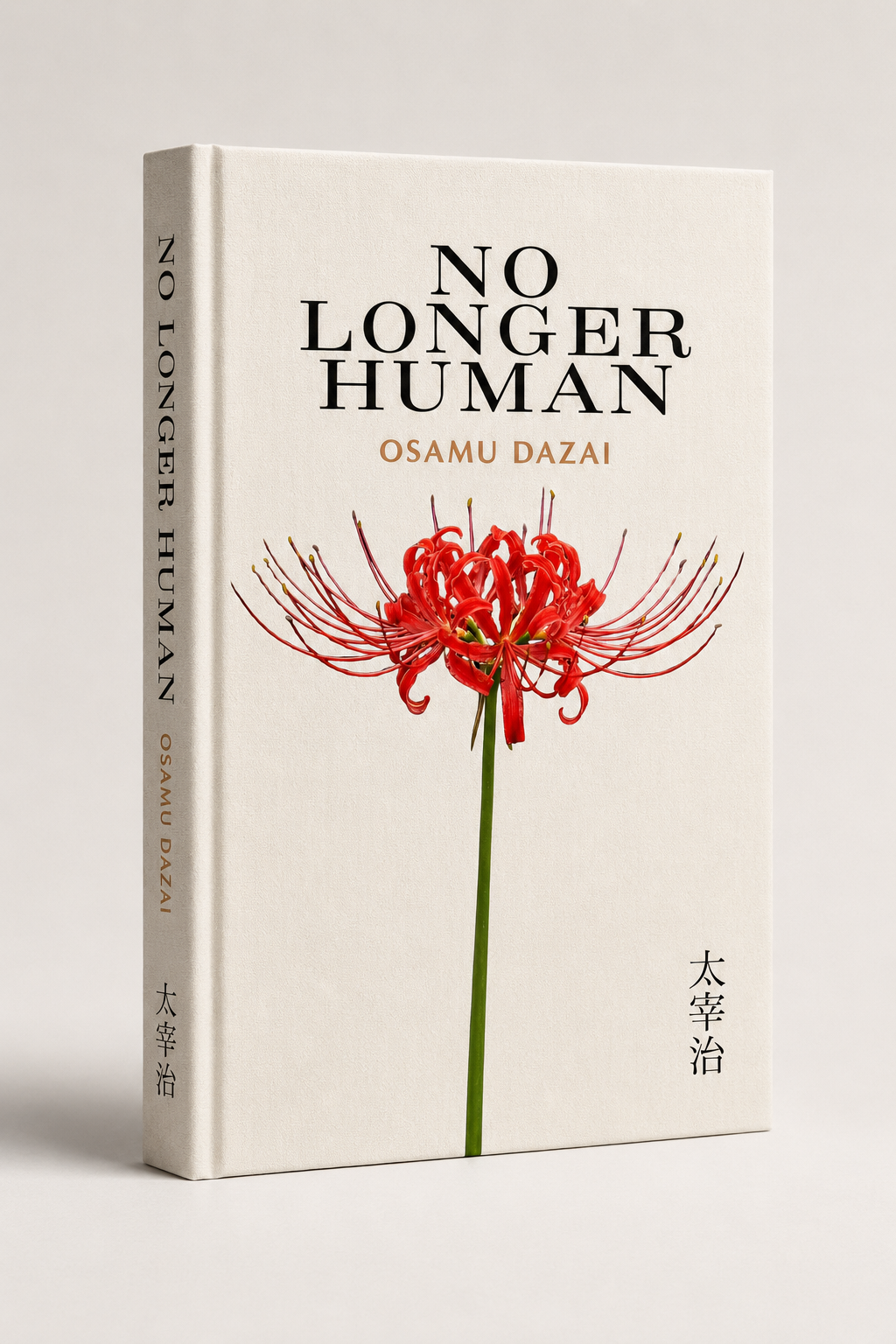
No Longer Human:
The Annotated Edition
Read Osamu Dazai’s No Longer Human (1948) with the Japanese context close at hand. Saori Motoyama’s translation includes section-by-section endnotes, an introduction and a glossary. The 213-page Time Warp Edition is available in paperback, hardcover and Kindle. Explore the novel below, or choose your edition on Amazon.
“What I despise about Dazai is that he exposes precisely those things in myself that I most want to hide. ”
A life lived behind a social mask
Now, a new translation for the modern reader
Time Warp Editions (2026)
No Longer Human by Osamu Dazai (1948) is a confessional novel narrated through three notebooks by a man who believes himself constitutionally incapable of belonging to humanity.
Originally titled Ningen Shikkaku (literally "disqualified as a human being"), it is a profound exploration of the exhaustion of performing a self you do not believe in, and the isolation of hiding behind a social mask.
This guide introduces the novel’s themes, answers common reading questions and explains the available English editions.
The Book's World
Ōba Yōzō learns to live among human beings by making them laugh. If they are laughing, they are not really looking, and cannot see what he really is, or isn't. His confession arrives as a set of notebooks, through which he traces the arc of a life spent in disguise: the clowning, the drinking, the seduction, the double suicide that kills the wrong person, the morphine, and the asylum where the mask comes off, leaving nothing recognizable underneath.
Written in May 1948, just weeks before Osamu Dazai (born Tsushima Shūji, 1909–1948) drowned himself in a Tokyo canal, the novel blurs the line between fiction and autobiography. It has sold an estimated 6.7 million copies in its Shinchōsha bunko edition alone , cementing its place as the second best-selling novel in Japanese history.
Why No Longer Human Matters Now
The exhaustion of pretending to be normal is a universal condition. Dazai's novel, though rooted in postwar Japan, anticipates the modern crisis of the social mask. For readers navigating neurodivergence, social anxiety, or the relentless performance demanded by platform capitalism, Yōzō's "clown" persona is not a historical artifact, but indeed it is a daily reality.
As critic Jane Yong Kim noted in The Atlantic (2023), Dazai “wrote, better than almost anyone, about the thin line between isolation and belonging.” The novel offers a stark, unfiltered look at depression and alienation, providing a dark solace for those who feel they do not belong.
Read a sample before choosing. Open the Amazon listing below, then select “Read sample.”
The Time Warp Edition
Western readers often encounter Yōzō's story without the context that Japanese readers take for granted: the rigid family system that governed his household, the political suppression that made attending a meeting a criminal act, the literary tradition that gave double suicide its terrible weight, and the codes of shame and obligation that shaped every relationship in his world.
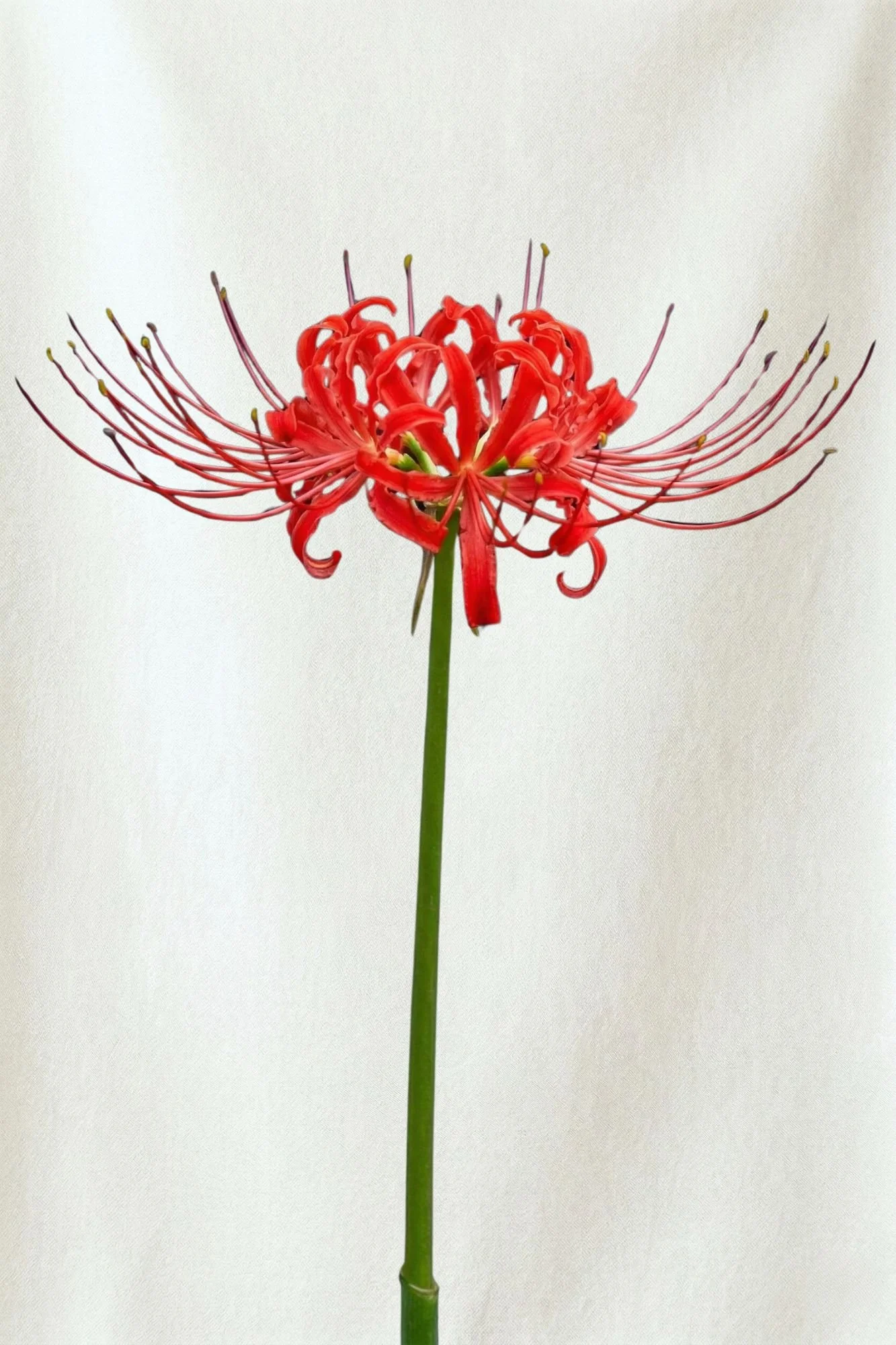
No Longer Human: The Annotated Edition (Time Warp Editions, 2026) bridges this gap. Translated by Saori Motoyama, this edition features section-by-section endnotes written for curious readers, an editor's introduction, a special essay on Higanbana (the Red Spider Lily), a chronology of key dates, and a glossary of Japanese terms.
FAQs
-
The original Japanese title, Ningen Shikkaku, translates literally to "disqualified as a human being." It reflects the narrator's deep-seated belief that his inability to understand or connect with others has stripped him of his humanity.
-
While No Longer Human is a work of fiction, it is heavily autobiographical. Osamu Dazai infused the protagonist, Ōba Yōzō, with his own experiences of addiction, alienation, and suicide attempts. The novel was completed just weeks before Dazai's death in 1948.
-
Yes. The character Osamu Dazai in the anime and manga series Bungo Stray Dogs is named after the real-life Japanese author (1909–1948). The character's special ability, "No Longer Human," is a direct reference to Dazai's most famous novel.
-
Junji Ito's 2017 manga adaptation of No Longer Human reimagines Dazai's novel through the lens of psychological horror. While it follows the core narrative of Yōzō's life, Ito amplifies the grotesque and surreal elements, making the internal dread viscerally visual.
-
The novel is relatively short, typically running around 170 pages depending on the edition. The Ink & Time Annotated Edition is 213 pages, which includes extensive endnotes and supplementary essays. It can usually be read in a single sitting.
-
Yes. No Longer Human is a bleak, confessional novel dealing with severe depression, isolation, addiction, and suicide. It offers an unfiltered look at a life unraveling, which many readers find deeply moving but emotionally heavy.
Books Like No Longer Human
If you are drawn to the themes of No Longer Human, consider these related works:
| Title | Author | Why It Connects |
|---|---|---|
| The Stranger | Albert Camus | Explores existential alienation and a protagonist disconnected from societal norms. |
| Notes from Underground | Fyodor Dostoevsky | A foundational confessional text featuring an isolated, hyper-aware narrator. |
| The Bell Jar | Sylvia Plath | A parallel exploration of depression, identity, and the suffocating expectations of normalcy. |
| Convenience Store Woman | Sayaka Murata | A contemporary Japanese novel about the pressures of conforming to societal roles. |
| My Year of Rest and Relaxation | Ottessa Moshfegh | Echoes the desire to withdraw entirely from the performance of modern life. |
Which Translation to Read
English editions of Osamu Dazai’s No Longer Human (1948) differ in translation and supporting material. Check the translator as well as the cover: a new design does not necessarily mean a new translation. These four published editions offer useful starting points; choose according to the reading experience you want.
| Translator | Edition | What to check |
|---|---|---|
| Donald Keene | New Directions | The established translation; use the edition specified if reading for a course. |
| Mark Gibeau | A Shameful Life, Stone Bridge Press | The same novel under a different English title; published in 2018. |
| Juliet Winters Carpenter | Tuttle Publishing | A translation published in 2024; the listed paperback runs 160 pages. |
| Saori Motoyama | Time Warp Editions | A 213-page edition with section endnotes, an introduction and a glossary. |
This site is published by Time Warp Editions, the publisher of the annotated edition. Edition details checked 9 September 2026.
Read the full translation guide, compare formats and find a sample.